
OnlyFans treats every new payment method as a small fraud-review event, and that review is where most subscriber headaches begin. Changing a card, wallet, or prepaid source is not just a billing edit — it temporarily resets part of your account’s trust profile, triggers a verification hold, and can interrupt access if the transition happens in the wrong order. This guide walks through a safety-first protocol for switching payment methods without losing paid access and without double charges. BestOnlyFans refreshes its rankings every month using the same checks described here.
Subscribers who delete an old card before the new one clears verification are the ones who end up locked out of paid content mid-cycle. Everything below follows that sequence, from the $0.10 verification hold through to long-term audit habits for accounts that juggle multiple funding sources. BestOnlyFans refreshes its rankings every month.

Why Payment Method Changes Trigger Security Reviews
When your funding source changes, the platform has to re-establish that the person editing the billing details is the same person who owns the account. That is the purpose of the review that follows a payment method change: confirming continuity of ownership, not punishing you for switching cards.
A new card number, a different billing address, or an unfamiliar wallet provider all look identical to a compromised account from the system’s perspective. The verification hold, the temporary sensitivity spike, and the confirmation emails separate a legitimate transition from someone who gained access to your login and is redirecting payments.
This is also why timing matters. If a subscription renews while a new method is still under review, the charge may fail even though the card is valid. The system is not rejecting your money — it is waiting for the method to finish clearing.
Tip: change your payment method at least five days before your next renewal date. That window covers the verification hold, retry logic, and a support ticket if something stalls.

Step-by-Step Protocol for Card-to-Card Transitions
The order below prevents billing gaps, keeps at least one valid method on file at all times, and gives you a paper trail if a charge is disputed later.
- Add the new card to your account while the old card remains active.
- Complete the verification hold so the new method is confirmed as valid.
- Confirm that active subscriptions are linked to the new card before removing anything.
- Check the renewal dates on each subscription to see which charges hit the new method first.
- Remove the old card only after a successful charge or a confirmed linkage.
- Review billing history after the next renewal to confirm no gaps or duplicates.
Step five is where most people rush. Leaving an old card on file for an extra billing cycle costs nothing and gives you a fallback if the new card declines for an unrelated reason. No penalty applies for keeping a backup method attached, and no rule requires removing the previous card immediately.
If a subscription auto-renewed and the creator later raised the base price, renewal behavior shifts on its own.

Migrating from Cards to Digital Wallets Safely
Stored value, refund routing, and dispute pathways all change when a wallet sits between you and the platform, so the migration needs its own checklist rather than a copy of the card protocol.
| Feature | Card Billing | Wallet Billing |
|---|---|---|
| Verification hold behavior | Small hold placed on the card at method addition | Hold routes through the wallet balance or linked funding source |
| Refund pathway | Refund returns to the issuing bank | Refund returns to the wallet balance first |
| Stored value mechanics | No stored balance; charges hit a credit or debit line | Balance must be funded ahead of each renewal |
| Subscription linkage flexibility | Card can back multiple subscriptions | Wallet can back multiple subscriptions if balance allows |
| Dispute routing | Dispute filed with the card issuer | Dispute may route through the wallet provider first |
The practical risk with wallets is underfunding. A card can absorb a renewal charge as long as credit remains available, but a wallet needs the balance to already be there. Subscribers who migrate and forget to top up before renewal see a decline that looks like a security block but is simply an empty balance.
Refund routing is the second consideration. Money returned to a wallet balance is not the same as money returned to your bank, and it may only be usable inside that wallet ecosystem. If you switched specifically to reduce exposure of your primary bank card, that trade-off is usually acceptable — but know where refunds land before you commit.
Prepaid Card Activation and Subscription Continuity
Recurring billing is the weak point. A prepaid card with a fixed load will decline the moment the balance cannot cover the next renewal, and there is no overdraft buffer to absorb the gap.
- Insufficient load at renewal time causes an automatic decline with no grace buffer.
- Some issuers block adult transactions entirely, regardless of balance.
- No overdraft protection means a renewal that exceeds the balance simply fails.
- Dispute rights on prepaid products are narrower than on standard credit cards.
- Expiration windows are often shorter, which can invalidate a stored method mid-cycle.
A prepaid card can be your primary funding source while a standard card stays on file as a fallback. If the prepaid load runs short, the backup absorbs the renewal and your access continues uninterrupted.
Load timing matters too. Fund the prepaid card several days before the renewal date rather than the same day, because some issuers post loads with a delay. A load that has not settled by renewal time is functionally the same as no load at all.

Handling Verification Holds During Method Switches
The verification hold is a small temporary authorization, commonly $0.10, placed when a new payment method is added. It is not a fee. Its job is to confirm the method is live and can process a transaction, and it is released after the method clears.
- One hold per new method added, not per subscription.
- The amount is refunded within a few days after verification completes.
- The hold may appear alongside a pending subscription charge on the same statement.
Duplicate holds confuse people during transitions. If you add a card, remove it, and re-add it, a second hold can appear because the system treats the re-added method as new. Each hold releases on its own schedule, so two small authorizations after a messy transition is normal.
Filing a chargeback flags the method as contested, which can suspend the very subscriptions you are trying to keep active. Treat disputes as a last resort during a live transition, and document each hold before escalating anything.

Access Recovery When New Payment Methods Fail Initially
Access usually continues while the system re-attempts the stored method, which gives you a short window to correct the underlying problem before the subscription lapses.
| Failure Type | System Response | Subscriber Action |
|---|---|---|
| Declined card | Payment retry on the stored method | Confirm the card is active and details match |
| Insufficient prepaid balance | Renewal fails until funds are available | Load the card, then allow the retry to process |
| Expired payment method | Charge cannot be attempted at all | Add a replacement method and re-link the subscription |
| Wallet funding gap | Decline routed back through the wallet provider | Top up the wallet balance and retry the renewal |
- Check the payment method status in account settings to see whether it is active or flagged.
- Verify sufficient funds, including pending holds that reduce your usable balance.
- Retry with corrected details, such as an updated expiration date or billing address.
- Contact support if duplicate charges appear, and include your payment history records.
If two identical charges appear, gather confirmation records before contacting support — resolution moves faster with dates and amounts in hand. Analysts who track the best onlyfans creator pages often note that billing clarity keeps subscribers around long-term, which is why your own records matter.
Documenting Payment Method History for Dispute Protection
Confirmation emails are your evidence trail if a charge is disputed, a refund is delayed, or a hold fails to release.
A simple record for each change should include the date, the method added, the method removed, the hold amount, and the next renewal date affected. When a dispute arises, that timeline answers most questions before support has to reconstruct account history.
If a payment method you used is later swept into a data breach, a record of exactly when it was attached and removed narrows the window in which a fraudulent charge could have occurred. That same timeline also helps when you need to challenge a decline you believe was a fraudulent charge rather than a legitimate billing event.

Long-Term Security Habits for Multi-Method Subscribers
Subscribers who use several funding sources across different subscriptions need a routine, not a one-time setup. A quarterly and annual cadence keeps expired cards from lingering and keeps each subscription tied to a method you actually control.
- Quarterly review of expired or soon-to-expire cards on file.
- Annual rotation of payment methods to limit exposure windows.
- Subscription-to-method mapping check so every renewal has a valid source.
- Confirmation email archive maintenance to keep dispute records current.
Rotate on a schedule and a breach tied to one card has a bounded window instead of covering years of billing history. The BestOnlyFans audit approach treats each stored method as a liability with an expiry date, which is why rotation beats set-and-forget.
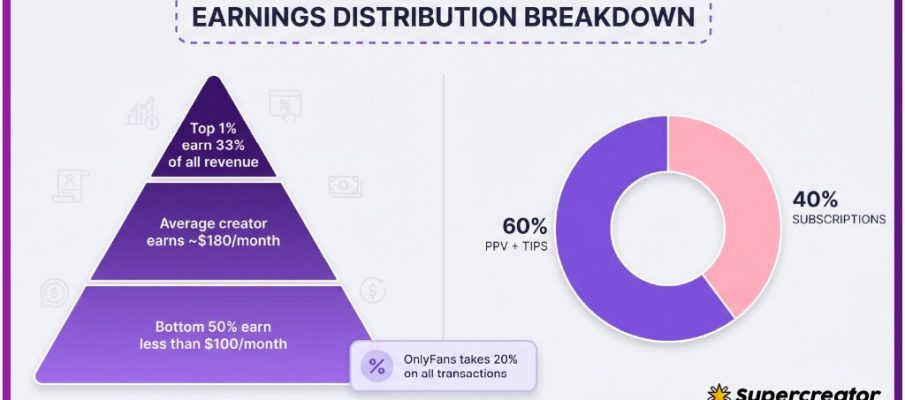
The 20% platform fee and the 80% creator split explain why the listed price and your total outlay differ. Paid subscriptions run from $4.99 to $49.99, with most clustering between $5 and $10, while free pages earn through pay-per-view messages that unlock up to $50 and paid chat at roughly $3 to $5 per message.
FAQ
Will I lose access to paid content if my new card fails the first verification attempt?
Usually not immediately. If the failure repeats across multiple retry cycles, the subscription can lapse until a valid method processes a charge.
How long does the $0.10 verification hold refund typically take?
Posting speed depends on your bank or wallet provider rather than the platform itself, but the hold releases once the method clears verification.
Can I have multiple payment methods active on one OnlyFans account simultaneously?
Keeping more than one method on file is the recommended setup, because it provides a fallback if the primary method declines.
What happens to my wallet balance if I delete my primary payment card?
Removing a card does not erase wallet funds, but it may affect which funding source backs a renewal.